

[Matsusaka Cotton and Shuzo Kuki's Concept of "Iki"]
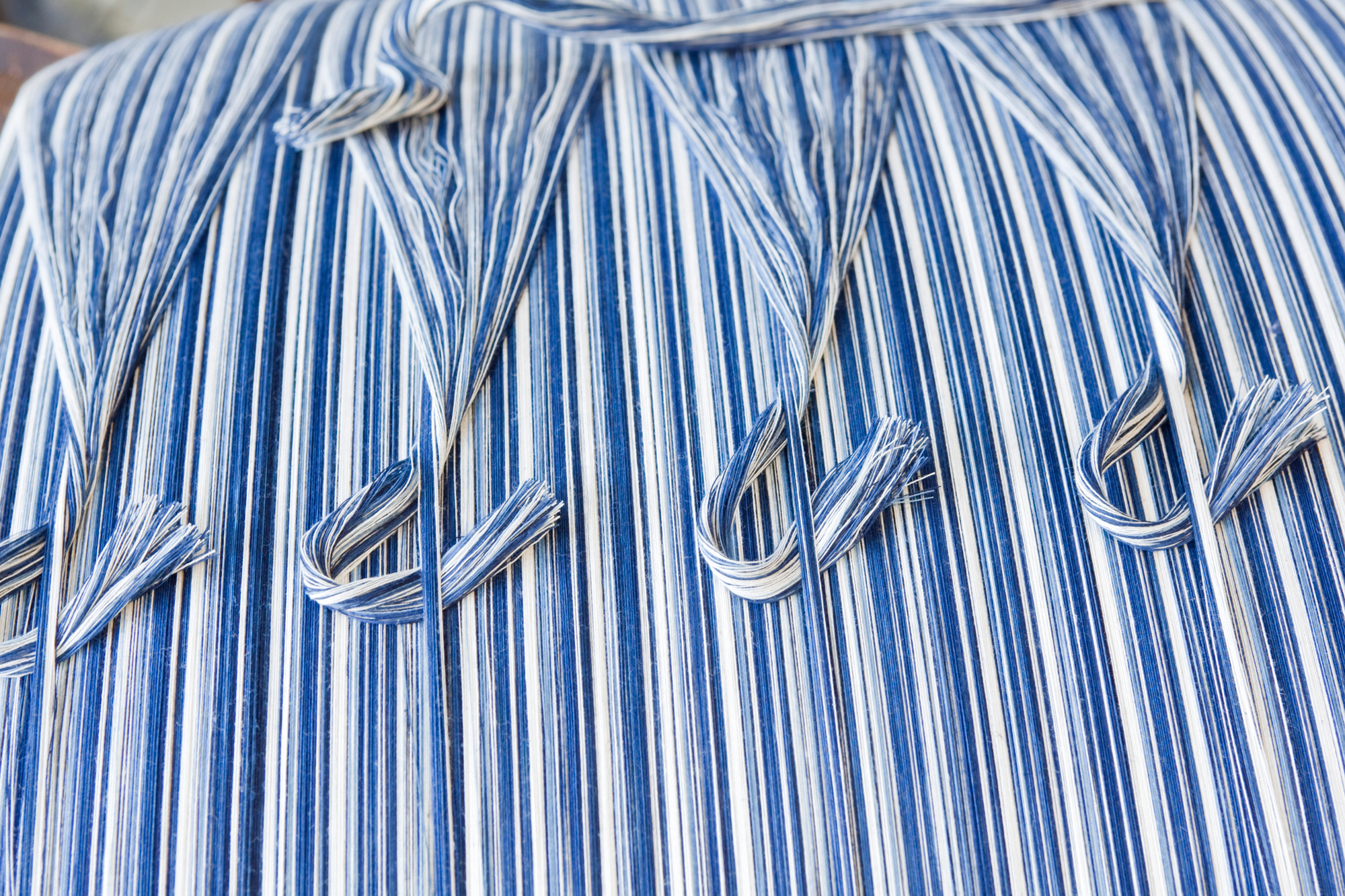
"Matsusaka cotton" is a traditional craft of Mie Prefecture. Its appeal lies in its beautiful natural indigo hues and the intricate striped patterns created by a rich variety of indigo gradations. In addition to the durability unique to cotton, the colors and texture evolve with use, allowing you to cultivate a personal attachment to the fabric—a true delight of the material. During the Edo period, it enjoyed overwhelming popularity among the people of Edo as a stylish and "iki" (chic) fabric for kimono.
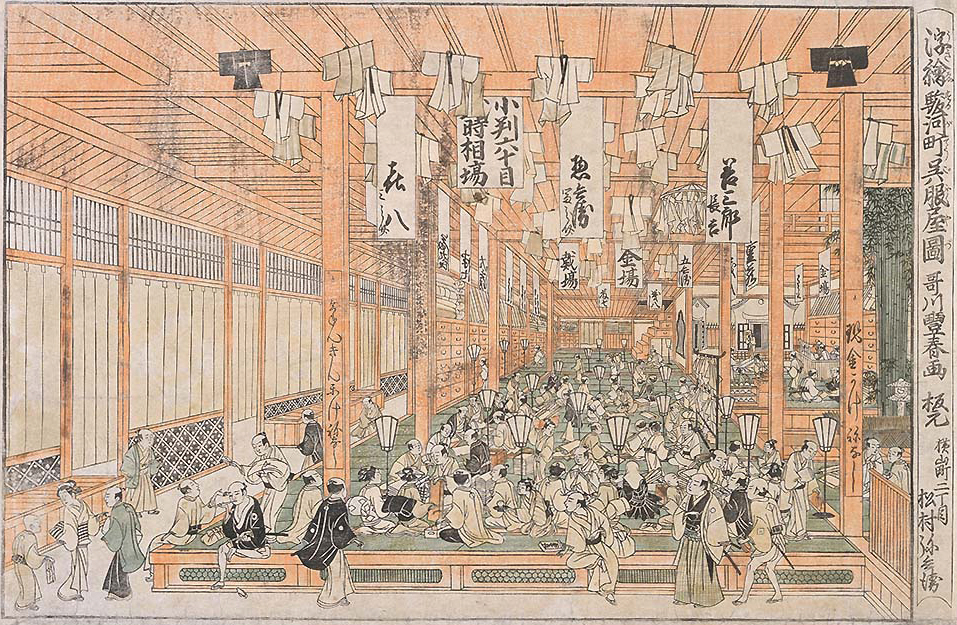
Matsusaka cotton is a cotton textile produced in the Matsusaka region of Mie Prefecture. In the Edo period, the Matsusaka region became a major production hub for cotton textiles, and Matsusaka merchants expanded into Edo to sell their cotton. In particular, Odenmacho 1-chome in Nihonbashi was crowded with cotton wholesalers originating from Ise Province, to the extent that it was satirized with the saying, "1-chome (Odenmacho) is nothing but Ise shops." Among them, striped patterns woven with indigo-dyed threads gained immense popularity. Takatoshi Mitsui, a wealthy merchant from Matsusaka who expanded his business handling Matsusaka cotton, founded the kimono store "Echigoya" in Edo. This "Mitsui Echigoya" was later inherited as Mitsukoshi and further developed into the Mitsui conglomerate.
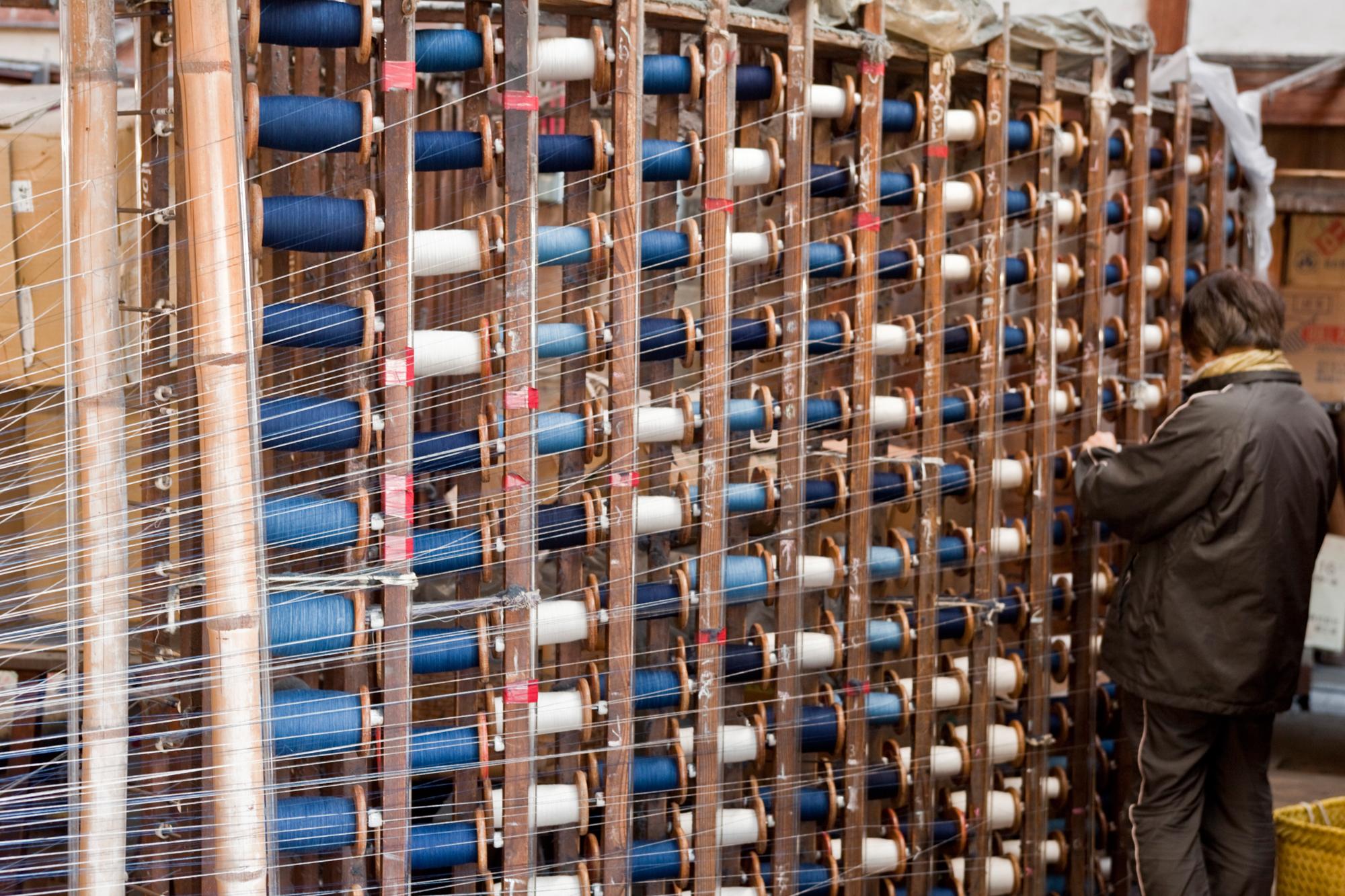
The defining characteristic of Matsusaka cotton is that the threads are dyed with indigo first, and then those threads are woven into stripes. Depending on the number of times it is dyed, indigo produces various shades ranging from light blue to deep navy. By combining these gradations, a diverse range of expressions is created, from narrow to wide stripes.
The strip-patterned cotton that gained popularity in this manner was called "Matsusaka-jima" and caused a huge craze in Edo. The roots of Matsusaka-jima are said to be "Ryujofu" (willow stripe cloth), which was woven around Hoi An in central Vietnam, formerly known as Cochinchina in the Annam Kingdom. Ryujofu features a fine striped pattern reminiscent of willow leaf veins, including narrow stripes such as "sensuji" (thousand lines) and "mansuji" (myriad lines). It is a long-standing pattern that represents Matsusaka cotton.
At the time, sumptuary laws were frequently issued in Edo to restrict extravagant clothing. Amidst such an era, Matsusaka-jima—which appeared plain from a distance but revealed fine stripes upon closer inspection—grew popular as a pattern that allowed people to enjoy style with modesty.
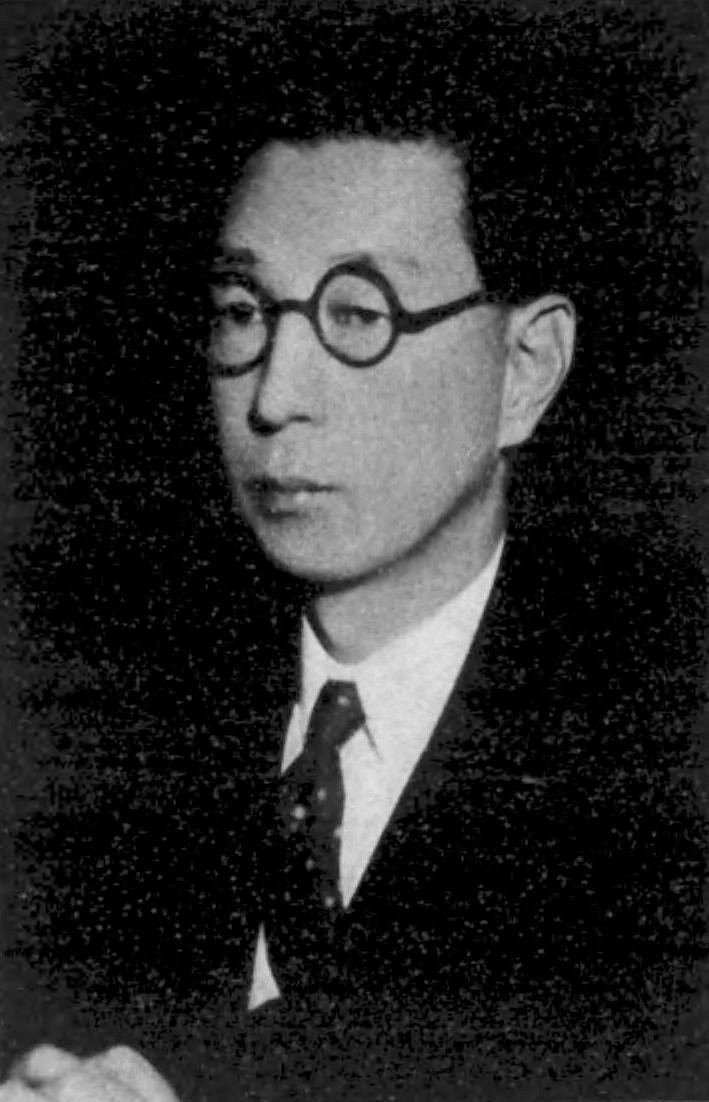
Modern philosopher Shuzo Kuki analyzed "iki," a traditional Japanese aesthetic consciousness, in "The Structure of 'Iki.'" Kuki grasped "iki" through three elements: coquetry, bravado, and resignation. Coquetry involves attracting another person while never completely merging with them, maintaining a delicate, close-yet-distant relationship. To this are added "bravado," which refuses to lose one's pride, and "resignation," which lets go of attachment.
Kuki also discussed striped patterns as a visual expression of "duality." Two lines run parallel without intersecting. That appearance holds a certain sense of tension and allure. This felt reminiscent of the resolute parallel lines displayed solely through the indigo gradations of Matsusaka-jima. "Iki" was an aesthetic consciousness not merely about being "fashionable," but closely tied to how the people of Edo maintained distances from others and preserved their personal pride.
Creating beauty within distance rather than standing out. That is also one perspective when viewing the stripes of Matsusaka cotton. It makes the aesthetic consciousness that the people of Edo called "iki" feel a little closer to home. Knowing its background naturally makes one desire it as a Japanese person.
Marukawa Shoten's Azuma Bukuro
https://www.shokunin.com/en/marukawa/azuma.html
Marukawa Shoten's Shijimi
https://www.shokunin.com/en/marukawa/shijimi.html
References
https://www.city.matsusaka.mie.jp/site/kanko/matsusakamomentoha.html
https://matsusakamomen.com/history
https://info-con.co.jp/staff/mitsui-takatoshi/
https://ja.wikipedia.org/wiki/三越
https://www.aozora.gr.jp/cards/000065/files/393_1765.html
https://www.shokunin.com/en/marukawa/profile.html
