

[MOA Museum of Art]
Perched on a high hill in Atami, the MOA Museum of Art is a truly one-of-a-kind destination where nature, architecture, and Japanese art—including works by Hokusai and the Rinpa school—blend on a grand scale. It is an experience well worth seeing for yourself.
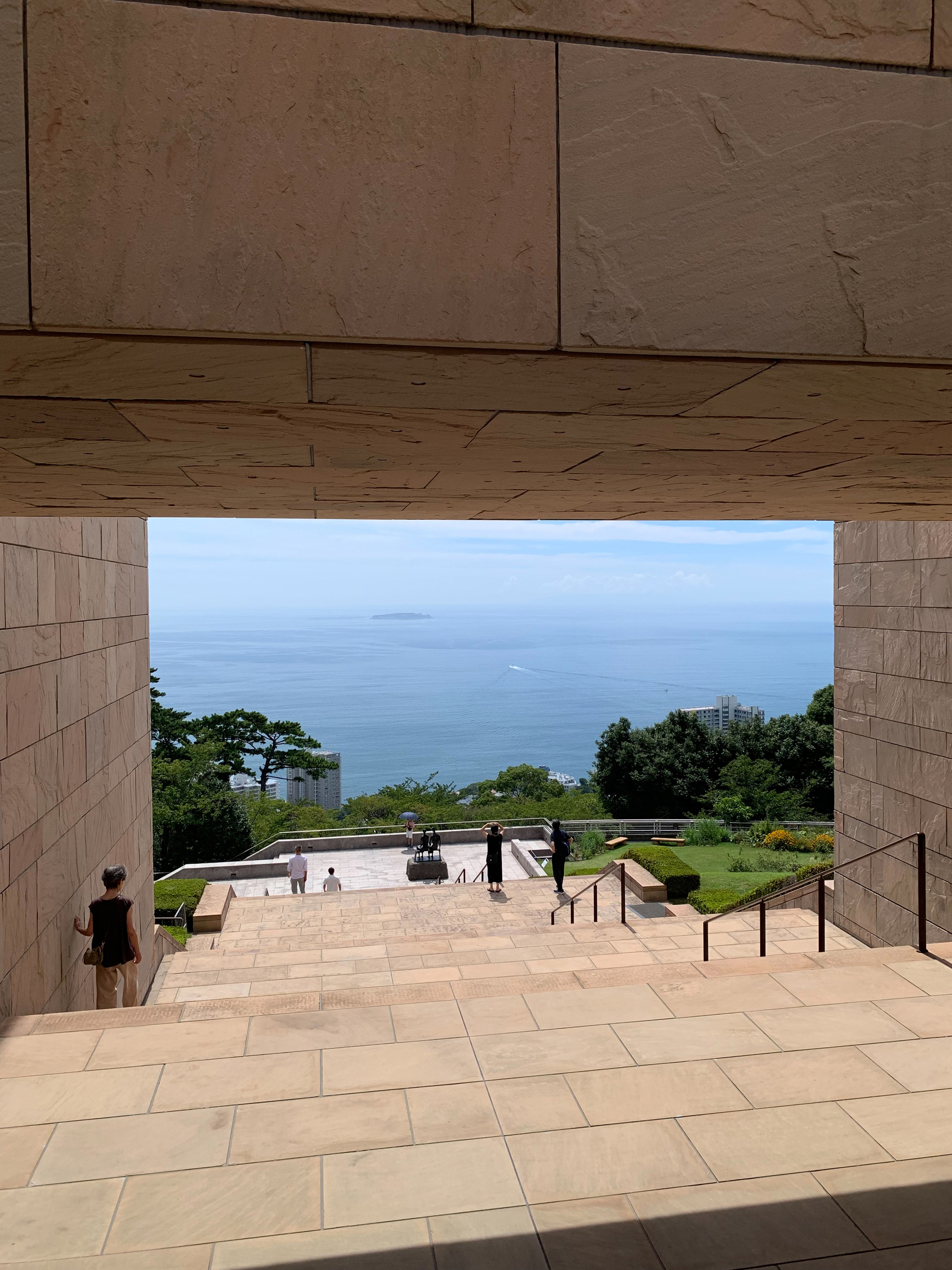
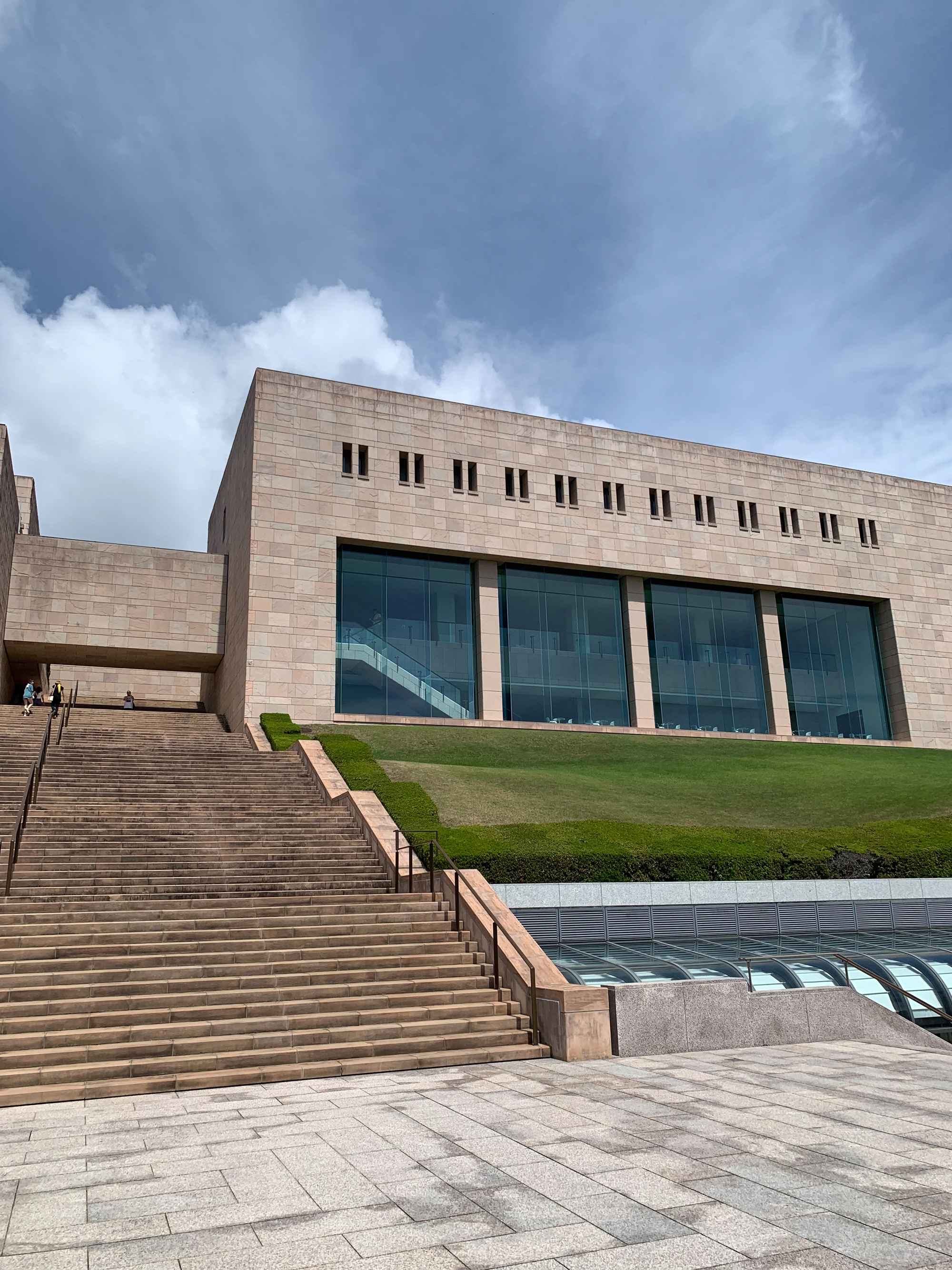
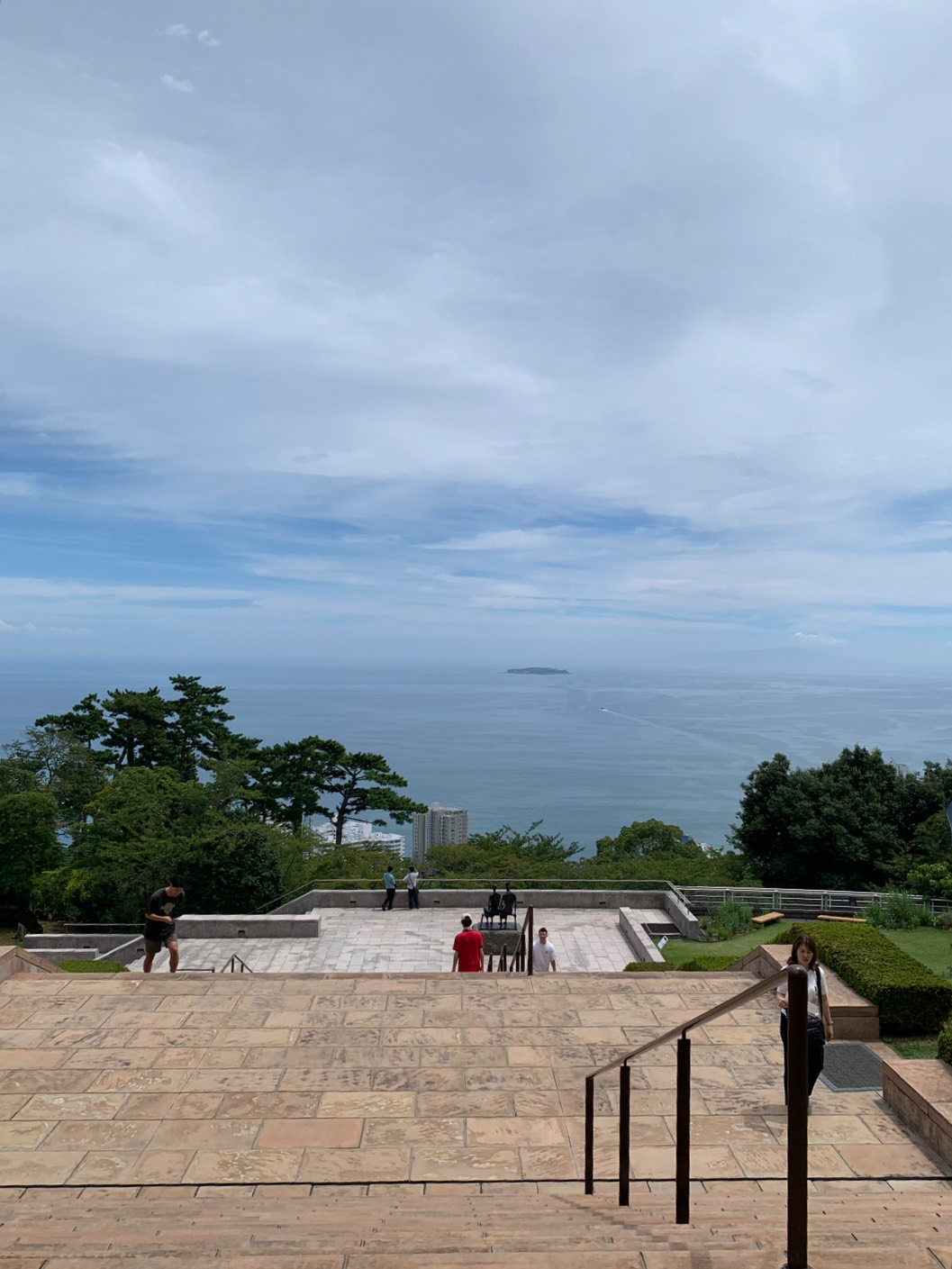
Because it is situated a little away from the center of Atami, many people may know of the museum but have never actually visited. Taking a bus from Atami Station or driving by car is recommended. The approach immediately draws you in as you ascend a very long series of escalators. Along the way, you pass a ceiling featuring a kaleidoscope of light, and upon stepping outside, a stunning view unfolds right before your eyes: an expansive blue ocean and vast sky framing a garden where seasonal flowers bloom across a grassy slope. The sheer refreshing beauty of the scenery is unforgettable. Comprising three floors above ground and one basement level, the main building stands on the high Momoyama hill at an elevation of 270 meters, making full use of the natural topography.
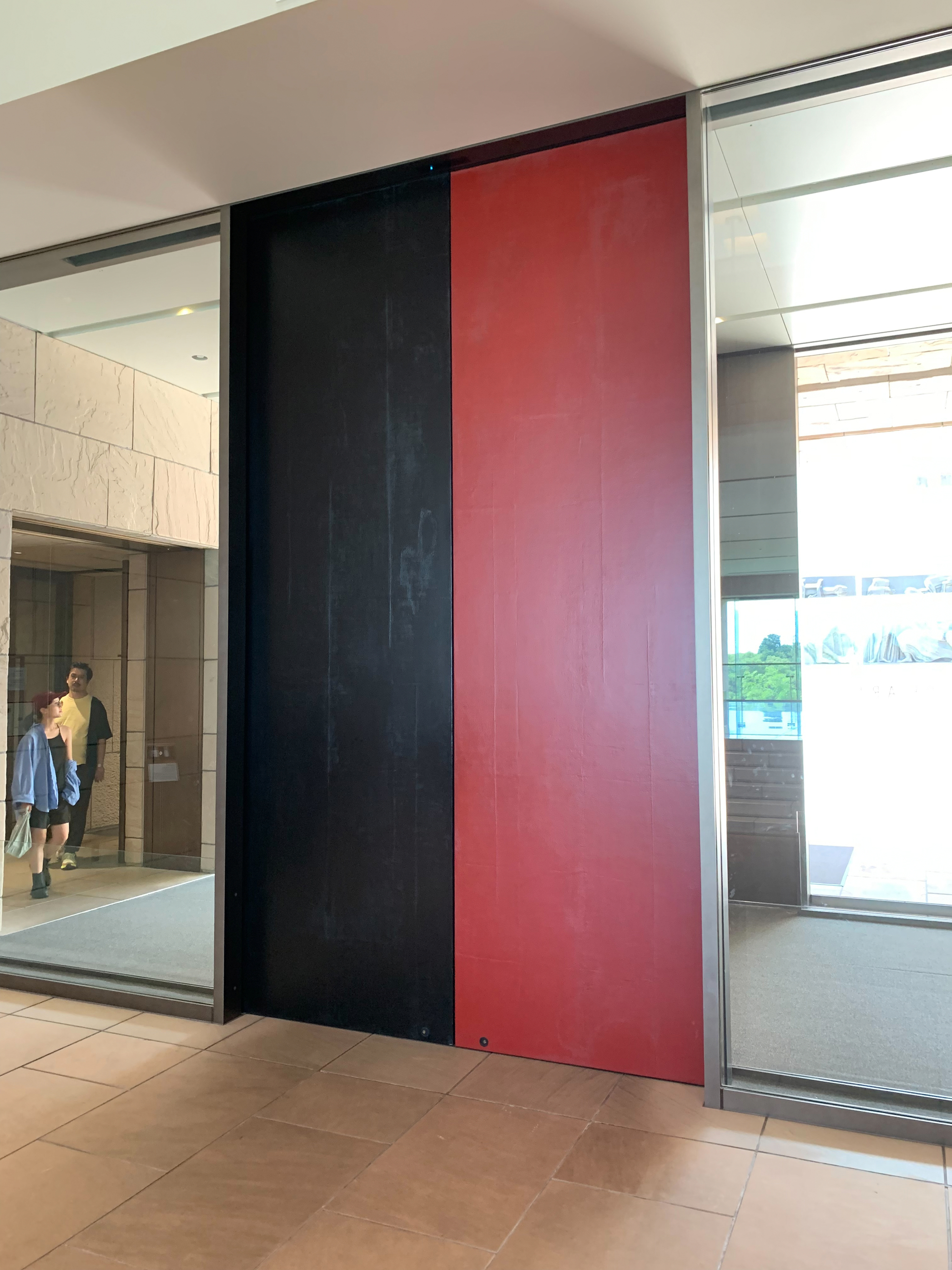
The exterior walls of the main building are crafted from Indian sandstone, featuring colors and textures that harmonize with the natural environment. At the main entrance, visitors are greeted by a striking 4-meter-tall lacquer door—a beautiful red-and-black contrast created by Living National Treasure and lacquer artist Kazumi Murose. Inside the exhibition spaces, traditional Japanese materials such as Yakushima cedar, Gyoja cedar, black plaster (kuro-shikkui), and tatami mats are utilized to maximize the beauty of the displayed works. To minimize reflections, low-reflection, high-transmittance glass is used for the display cases, and I was genuinely amazed by how crystal-clear the artworks appeared.
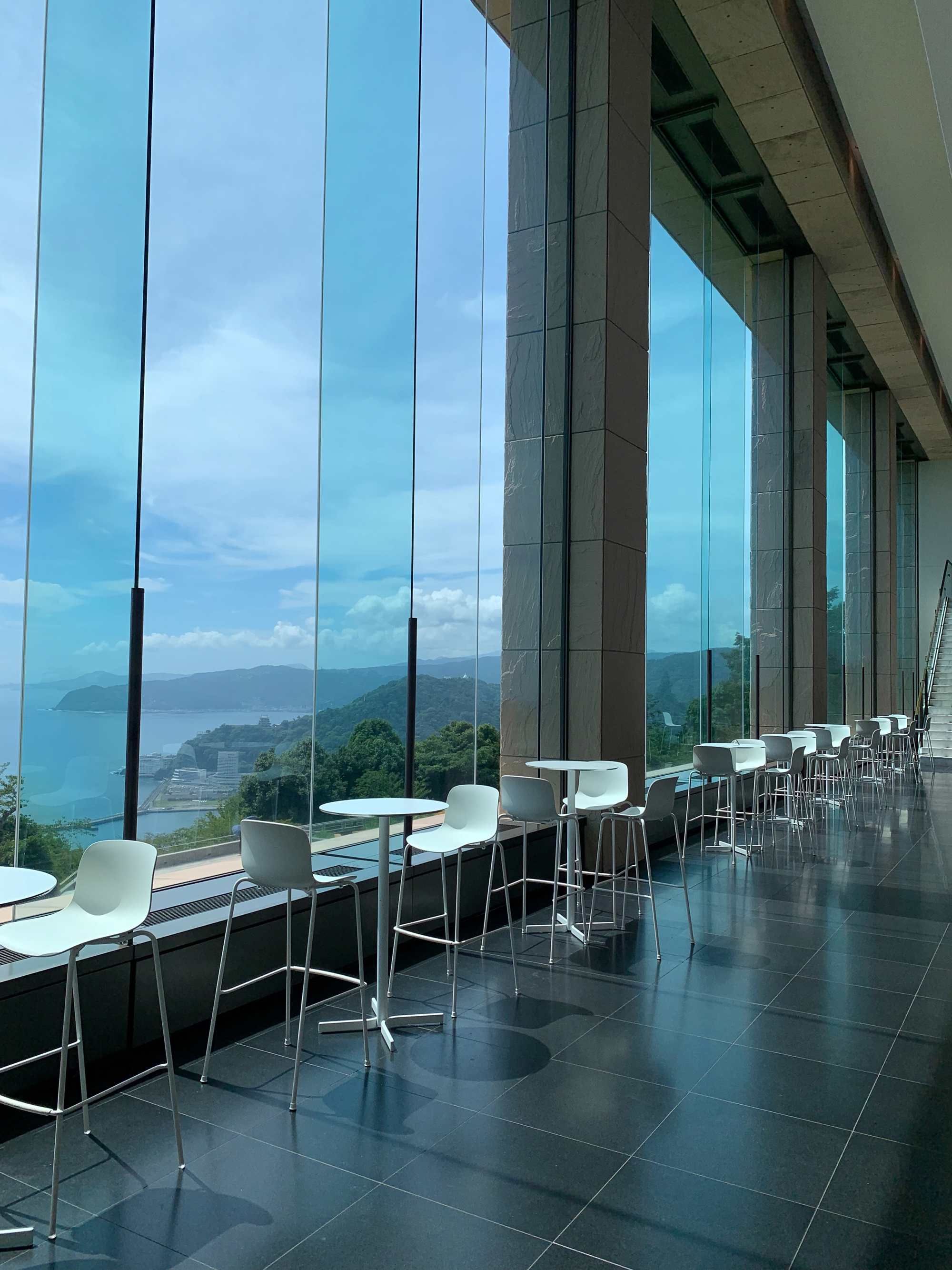
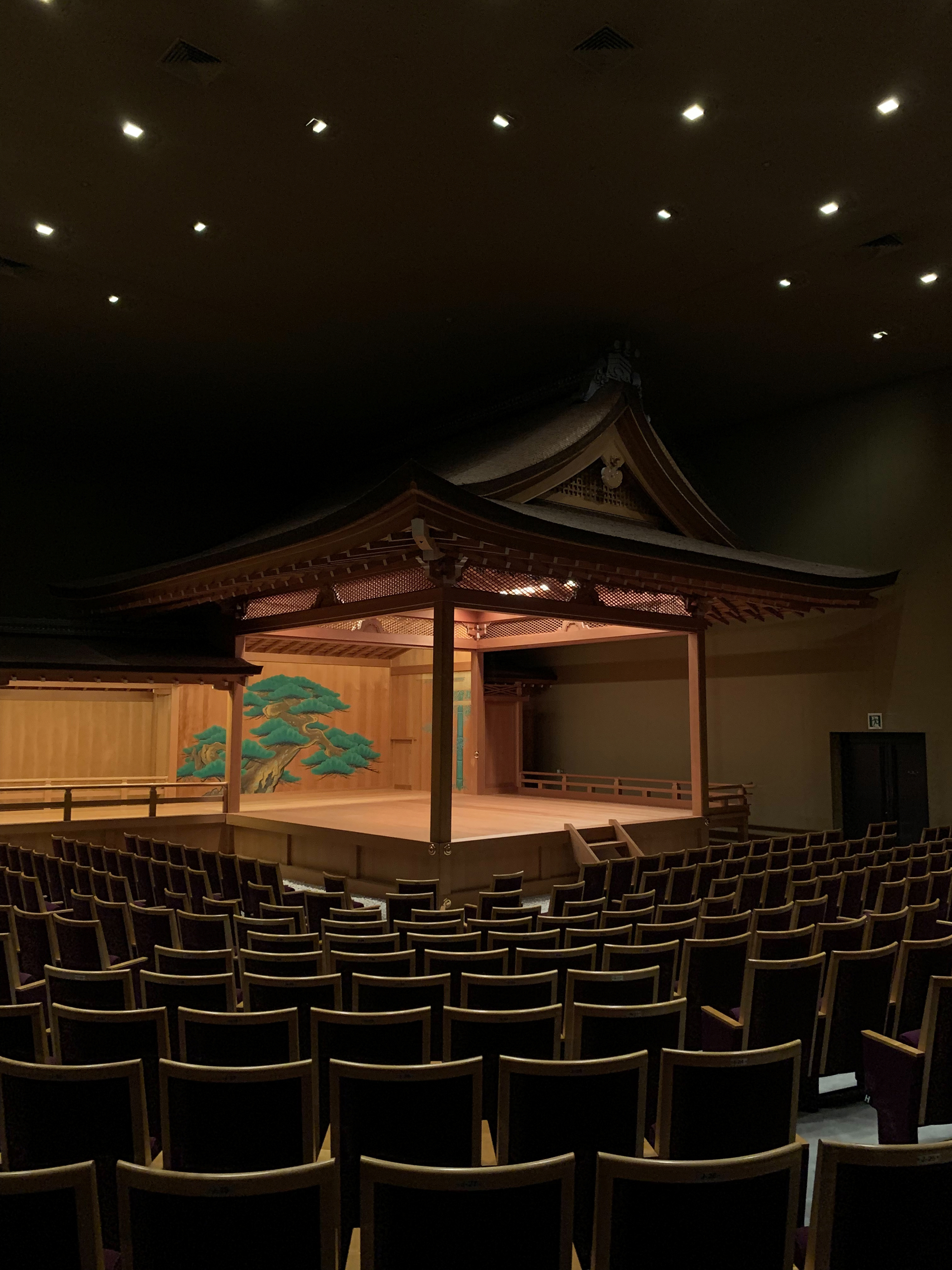
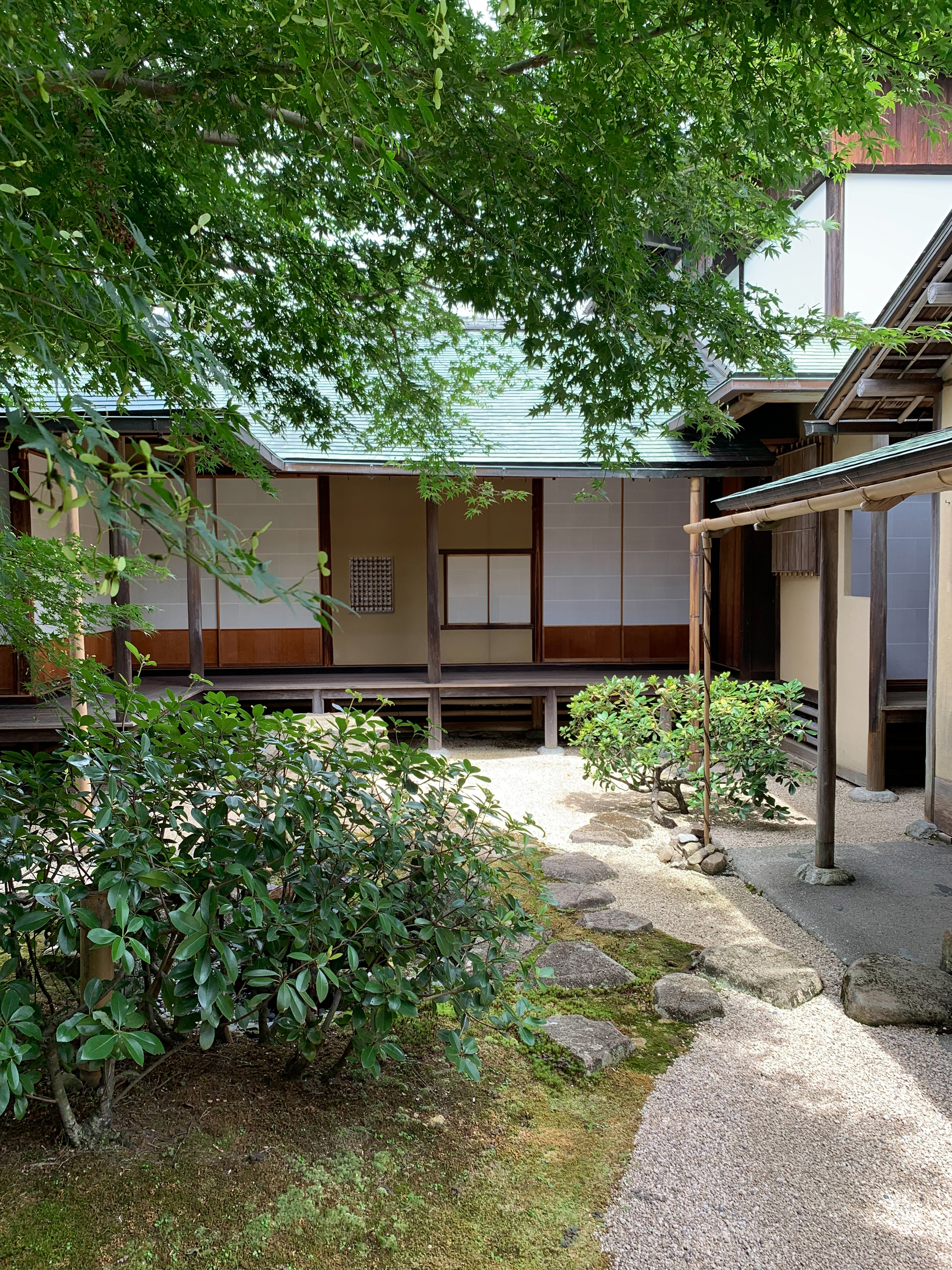
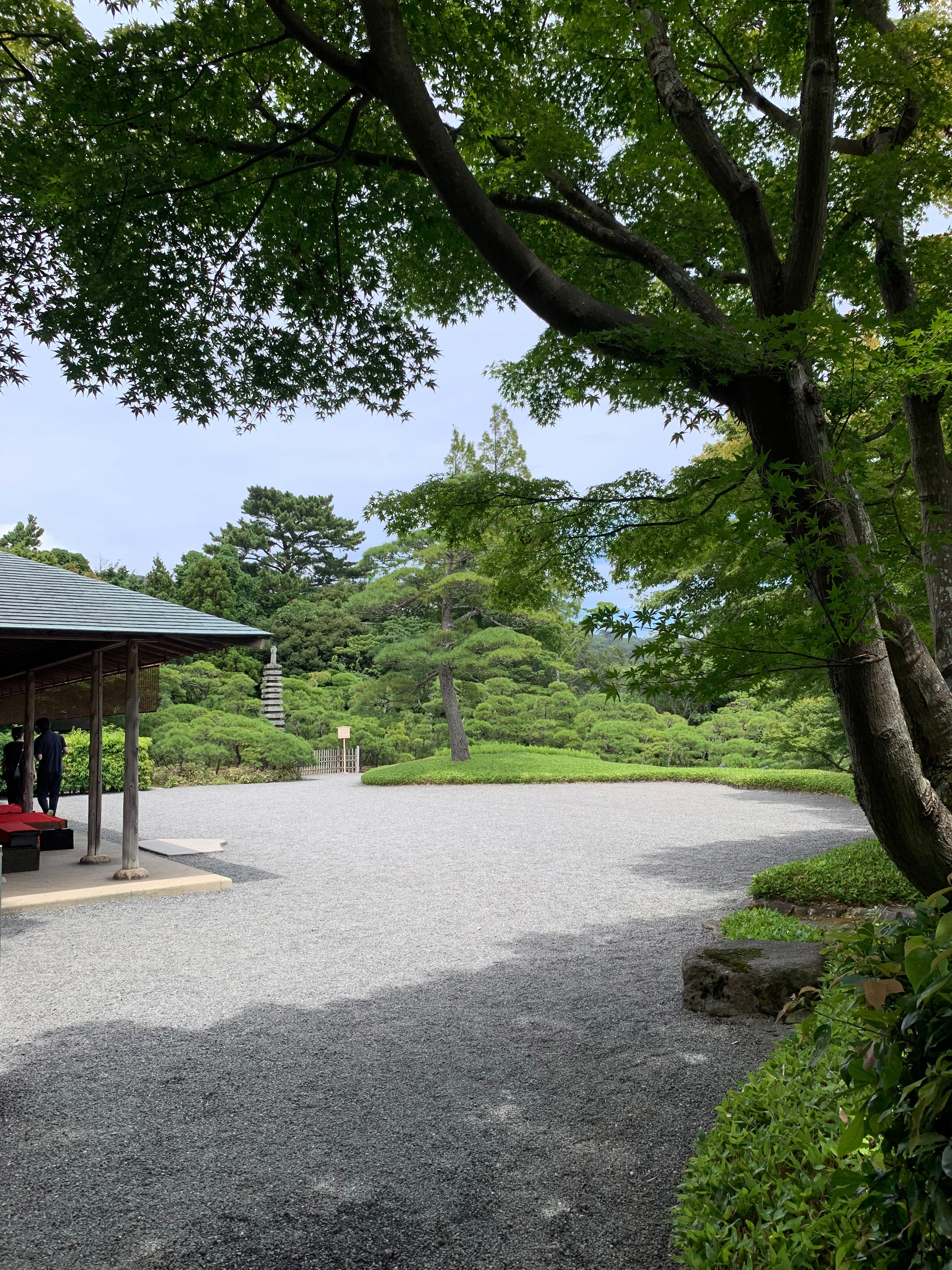
The museum features permanent exhibits such as a Noh theater, a reconstructed model of Toyotomi Hideyoshi's Golden Tea Room, and Nonomura Ninsei's National Treasure, the "Jar with Wisteria Design in Overglaze Enamels." After viewing the exhibits, visitors can also enjoy a stroll through the outdoor garden, which includes a reconstruction of Ogata Korin's residence, the Korin Yashiki. Several dining options are also available on-site, including "the café," a bright and open space with soaring ceilings that offers a panoramic view of Sagami Bay, dotted with Hatsushima and Izu Oshima islands—the perfect spot to rest before or after exploring the galleries.
With so many highlights competing for attention, before I knew it, I had spent over three hours there. It is rare to find a place where you can immerse yourself so leisurely and lavishly in the overwhelming beauty of Japanese art. If you ever travel to Atami, be sure to pay a visit.
MOA Museum of Art
https://maps.app.goo.gl/hhNcLGM3KcoQCncJ9
the café
https://maps.app.goo.gl/6ANHtqritSbb3gi27
Showroom Information
https://www.shokunin.com/en/showroom/
Reference
https://www.moaart.or.jp/
